

Introduction
The first few hours after the disaster tend to be the most disorienting. Roads become impassable, family members become separated, and even official communication channels can fall silent. Phones aren’t working, towers collapse, and overnight the most fundamental requirement — contact — is made impossible. Without credible information, people panic. Rescue workers find it hard to coordinate. And communities already traumatized by loss feel isolated from the rest of humanity. In such moments, Mobile Hotspots MH07 for Critical Emergency Connectivity becomes a lifeline, ensuring that vital communication channels remain open when everything else fails.
This is where cell-internet devices come into play. They don’t make a great appearance — it’s simply a small, battery-powered box with a flashing light. But the Horizon MH07 4G LTE MiFi has been making the case that size doesn’t matter. What does matter is that it gets the job done when nothing else will. In disaster areas, it’s been the difference between piecemeal effort and effective response.
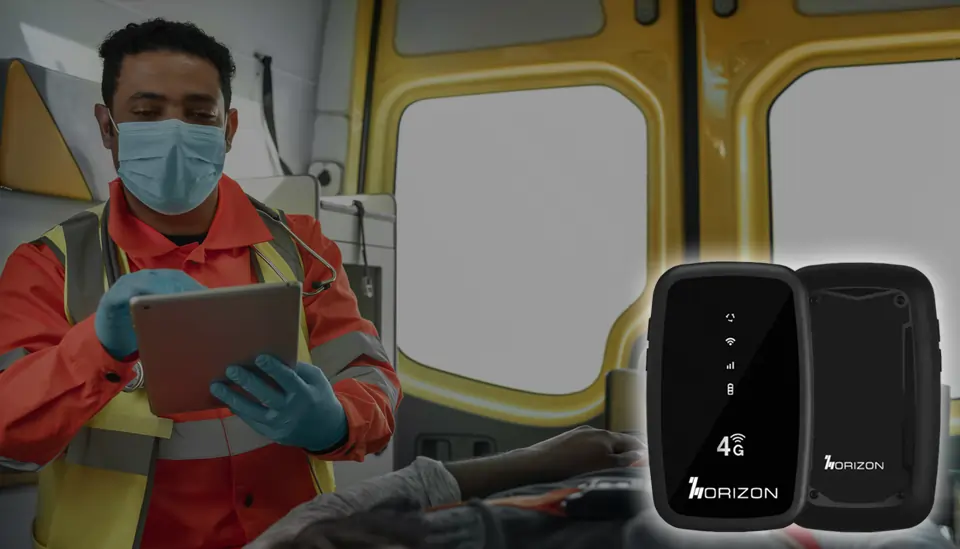
When networks fail, Small devices hold the line
In a hurricane or earthquake, it’s not unusual for cellular networks to fall apart. Towers are destroyed, power plants shut down, and coverage is spotty or non-existent. In a few places, individuals can’t even send out a simple text message to inform loved ones they’re alive.
Portable 4G MiFi units such as the MH07 provide an alternative. Rather than drawing on a fixed grid, they produce a tiny wireless bubble — a personal WiFi network to which anyone in range can connect. Aid workers can file reports, families can send whereabouts, and coordinators can get back in touch with their teams.
Where the MH07 differentiates itself, though, is how it handles this under stressful conditions. With a capacity for 8 client devices, a 3700mAh removable Li-ion battery, and a maximum of 10 hours of working time, it was obviously made with mobility and disaster relief in mind. Throw in support for external antennas, and even when the surroundings are harsh — i.e., thick concrete shelters or remote locations — it still manages to provide a signal.
Field-Level deployment: A hotspot in a tent
Imagine this: relief camp after flood disasters. The terrain is muddy, there are supplies strewn in plastic bags, and volunteers dashing between stations. Amidst all this is a small MH07 LTE MiFi hotspot, its 2.4GHz WiFi 6 signal working unnoticed to keep everyone connected.
A medic uploads patient data to a hospital two towns away. A father sends a short message to his sister across the border: We’re safe, don’t worry. Logistics teams track trucks bringing in bottled water. The hotspot isn’t just another gadget — it’s the unseen hub that keeps the entire operation stitched together.
And when the battery is running low? A rapid switch with a spare keeps it going, no downtime. That easily removable battery, so taken for granted in normal operations, turns to gold in crisis.
Why secure connectivity matters during crisis
At times of peace, we consider internet security as passwords or safeguarding online shopping. Disasters have different stakes. A breach of sensitive information can endanger evacuees. Unprotected networks can encourage interference when coordination is most important.
The MH07 was designed with that in mind. Unlike public WiFi, which is open to anyone, it allows responders to create a secure mobile internet device that can’t be readily hijacked. For organizations that rely on privacy — medical units, NGOs, even government disaster relief units — that level of protection is as important as speed.
Horizon MH07: More than just travel tech
For many people, the term “portable hotspot” brings to mind travel — using a MiFi device while moving through airports, trains, or hotels. And yes, the MH07 works perfectly there. Its CAT 4 4G LTE capability gives it the speeds needed for streaming content, video calls, or browsing while on the move.
But the true value of the Horizon MH07 appears in less flashy settings: rural hamlets, inundated suburban districts, or blackout areas. In those contexts, details such as its nano SIM slot, USB 2.0 connector, and SD card capability enable it to be flexible enough to adjust. It turns into something more than a trip add-on; it’s a connectivity device unto itself.
Connectivity that scales to the situation
All emergencies are not created equal. A forest fire may blackout one town’s grid for a couple of days. A provincial earthquake may take out half a province’s infrastructure. MH07 scales to fit.
- For families: it can be used as a backup to home internet connectivity during outages.
- For tourists: it provides portable 4G hotspot connectivity in regions where roaming is variable.
- For groups: it handles several devices simultaneously, enabling small groups to be operational without waiting for complete network recovery.
In both situations, it converts “offline” into “online” with less effort.
Power that lasts when others fail
Energy is one of the very first things to be depleted during an emergency situation. Even if a hotspot could theoretically remain connected, it’s pointless if it poops out after a few hours. That’s where the MH07’s 3700mAh battery proves its value.
Up to 10 hours of working time on a single charge means teams can rely on it for a full day of operations. And because the battery is removable, charging spares in rotation is easy. Unlike sealed units that force users to tether to a wall socket, this one respects the unpredictable nature of emergencies.
Beyond emergencies: Everyday benefits
It’s worth noting — emergency use is just half the MH07 story. On regular days, it’s equally beneficial for tourists, remote workers, and families. Students utilize it as a small 4G LTE mobile hotspot to study in locations with flaky broadband. Remote workers take it with them to guarantee they can safely connect outside the workplace. Parents give it to children on road trips so that they can stream without consuming a phone plan.
By serving as both a functional travel internet device and a serious emergency backup, it serves two purposes at the same time — daily convenience and life-saving infrastructure.
Horizon MH07 Specs at a glance
- Network: 4G LTE CAT 4 (up to 150Mbps download / 50Mbps upload)
- WiFi: 2.4GHz WiFi 6
- Client Support: Up to 8 wireless devices
- Battery: 3700mAh removable Li-ion (about 10 hours working time)
- Slots: Nano SIM slot, SD card slot, USB 2.0 port
- Extras: External antenna support for wider coverage
- Size: Compact, lightweight, convenient to carry
These figures seem like mere specifications, but in use they amount to convenience, staying power, and dependability in the real world.
FAQs: About MH07 for critical emergency connectivity
Q1. Can the MH07 serve as a home internet backup?
Yes. Most households use it as a back-up for broadband failure.
Q2. How many devices can connect simultaneously?
Up to 8, so suitable for small families or groups.
Q3. Is it compatible with external antennas?
Yes, which assists in low-signal areas.
Q4. How long is the battery life?
Approximately 10 hours on one charge, with support for removable battery.
Q5. Is it suitable for streaming content?
Yes, its CAT 4 LTE speeds stream and video call smoothly.
Q6. Is it compatible with international SIM cards?
It accommodates nano SIMs, so local carrier bands determine compatibility.
Q7. Is it secure enough for work data?
Yes. It’s a secure mobile internet device for sensitive use.
Q8. Can it replace a fixed broadband connection?
Not full-time, but it’s great as a mobile broadband or backup option.
Q9. How portable is it?
Lightweight and small enough to put in a pocket or emergency kit.
Q10. Who will gain the most by wearing the MH07?
Travelers, families, remote workers, emergency responders — essentially anyone who can’t afford to be out of touch.
Final thoughts
In an age when communication is regarded as a given, crises alert us to just how vulnerable those systems actually are. The Horizon MH07 LTE MiFi hotspot isn’t a travel accessory or even a WiFi box to bring along — it’s a lifeline during times of crisis.
From flooded regions in tents to emergency power in storms, it’s been engineered to function where larger systems fail. Small, stable, and trusted, it maintains people engaged in conversation, sharing, and planning when quiet can be risky.
For families, aid groups, or anyone who values a lifeline in their pocket, the MH07 stands as one of the best 4G MiFi solutions available — proof that sometimes, the smallest devices carry the heaviest weight.
Learn more about MH07 for Critical Emergency Connectivity here.
Related Posts
Mobile Hotspots for Hotels – Reliable Internet Solutions
Best Mobile Hotspot For Road Trip (Cars, RVs, Buses)
Wifi Hotspot For Events (Weddings, Festivals, Fairs)
Best Mobile Hotspots for Trade Shows & Exhibitions
Best Mobile Hotspot for Working Space – Fast & Secure Internet
Why MH07 Is Perfect for Remote Work Travelers and Digital Nomads
Stay Connected Everywhere: How MH07 MiFi Boosts Mobile Internet Access
MH04 vs Public WiFi: Speed and Security Where It Matters the Most
Why MH04 Is Your Ultimate Travel LTE Companion
Why MH500C is Ideal for Seamless Remote Work and Mobile Offices
Mobile Hotspot vs Phone Tethering – Why MH07 is the Way to Go
How MH500C Powers Real-Time Edge Communications