

Retail has changed dramatically over the past decade.
Stores are no longer just physical shelves and cash registers. Today’s retail environments depend on:
- Cloud-based POS systems
- Digital signage
- Real-time inventory tracking
- IoT sensors
- Mobile checkout devices
- Omnichannel fulfillment systems
All of this requires reliable, secure, and scalable connectivity.
And that’s where LTE (Long Term Evolution) plays a critical role.
In this guide, we’ll explain:
- What LTE is
- How LTE works
- Why retailers use LTE connectivity
- How LTE supports POS, IoT, and digital transformation
- Where LTE fits compared to Wi-Fi and wired networks
Let’s start with the basics.
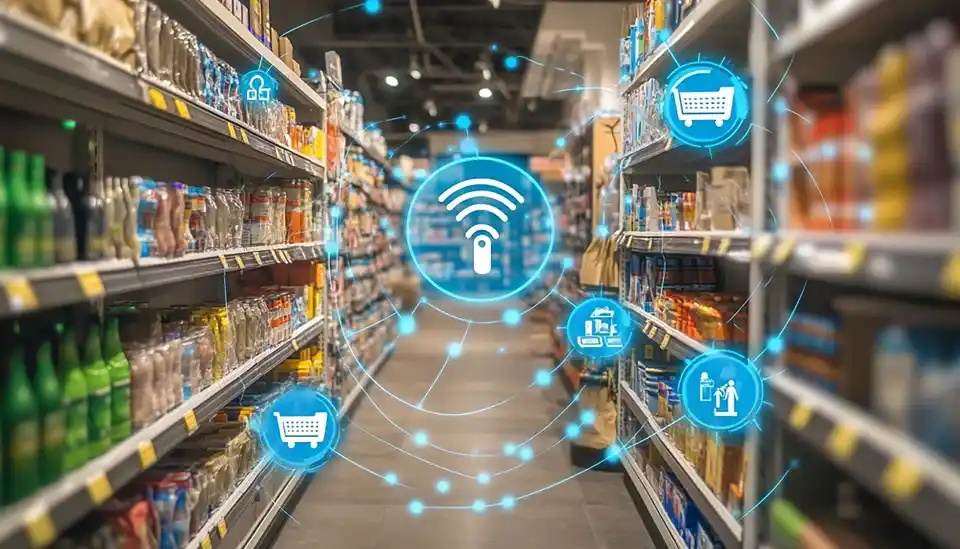
What Is LTE?
LTE (Long Term Evolution) is a 4G and 5G Products wireless broadband technology that provides high-speed internet connectivity using cellular networks.
Unlike traditional wired broadband or in-store Wi-Fi, LTE connects devices through:
- Cellular towers
- Licensed spectrum
- SIM-based authentication
This means LTE networks:
- Do not rely on local cable infrastructure
- Avoid common Wi-Fi congestion issues
- Offer secure, carrier-managed connectivity
According to the Federal Communications Commission (FCC), LTE provides high-speed wireless broadband with improved reliability and reduced latency compared to earlier mobile technologies Federal Communications Commission.
In simple terms, LTE is secure wireless internet delivered through cellular infrastructure.
Why connectivity is critical in modern retail
Retail stores today operate like mini data centers.
Here’s what depends on stable connectivity:
1️ Point of sale (POS) systems
Cloud-based POS platforms process:
- Card payments
- Mobile wallet transactions
- Inventory synchronization
- Customer loyalty programs
Even a short outage can mean:
- Lost revenue
- Long checkout lines
- Poor customer experience
2️ Real-time inventory management
Modern retailers use:
- RFID systems
- Smart shelves
- Automated stock alerts
These systems require continuous data flow.
3️ Digital signage & promotions
Retailers update promotions instantly across:
- Screens
- Interactive kiosks
- Price tags
Without connectivity, messaging stops.
4️ Omni channel retail
Buy Online, Pick Up In Store (BOPIS) requires:
- Inventory sync
- Order tracking
- Staff coordination
Retail has become fully dependent on network uptime.
How LTE Supports retail environments
Now let’s break down exactly how LTE retail connectivity solves these challenges.
Reliable primary or backup internet
LTE can serve as:
- Primary internet connection for small or pop-up stores
- Failover backup connection for larger retail chains
If fiber or cable broadband fails, LTE automatically takes over — keeping:
- POS systems operational
- Transactions processing
- Customer experience uninterrupted
This concept is called LTE failover for retail networks, and it dramatically reduces downtime.
Secure connectivity for POS systems
Payment processing requires:
- Encrypted transactions
- PCI compliance
- Secure data transmission
LTE uses:
- SIM-based authentication
- Encrypted carrier networks
- Isolated cellular pathways
Unlike public Wi-Fi, LTE reduces exposure to internal store network risks.
Retailers concerned about cybersecurity increasingly choose LTE retail wireless solutions for transaction protection.
Supporting retail IoT sevices
Retail IoT includes:
- Smart shelves
- Temperature sensors
- Security cameras
- Foot traffic counters
- Electronic shelf labels
LTE supports these devices by:
Providing stable bandwidth
Enabling remote locations
Avoiding local network congestion
Supporting scalable deployments
As noted by the GSMA, cellular networks are ideal for IoT applications that require reliability and broad coverage GSMA.
For retailers expanding smart store initiatives, LTE becomes foundational.
Enabling pop-up stores and remote retail locations
Pop-up stores and seasonal retail locations need:
- Fast deployment
- Flexible setup
- No lengthy ISP installation
LTE allows retailers to:
- Deploy connectivity within hours
- Avoid digging or wiring
- Operate in temporary spaces
This makes LTE perfect for:
- Trade shows
- Holiday retail booths
- Mall kiosks
- Rural store locations
Enhancing customer experience
Modern in-store experiences include:
- Mobile POS tablets
- AR product displays
- Self-checkout kiosks
- Real-time loyalty rewards
All of these depend on:
- Low latency
- Consistent throughput
- Network stability
LTE ensures customer-facing technology works smoothly — reducing friction at checkout and improving satisfaction.
LTE vs Wi-Fi in retail stores
Many retailers ask: Why not just use Wi-Fi?
Here’s a quick comparison:
| Feature | Wi-Fi | LTE |
| Infrastructure | Local router dependent | Cellular network |
| Setup Time | ISP installation needed | Rapid deployment |
| Security | Shared network risks | SIM-based authentication |
| Congestion | High in busy stores | Carrier managed |
| Mobility | Limited | Wide coverage |
Wi-Fi still plays an important role inside stores. However, LTE adds:
- Redundancy
- Reliability
- Geographic flexibility
The smartest retail networks often combine wired + Wi-Fi + LTE failover for maximum uptime.
Multi-store retail and LTE scalability
Retail chains operating across multiple cities face:
- Different ISP reliability levels
- Inconsistent installation timelines
- Varying broadband costs
LTE standardizes connectivity across:
- Franchise locations
- Remote branches
- New store rollouts
Retail IT teams benefit from:
- Faster store openings
- Simplified network planning
- Consistent failover protection
This is especially valuable in franchise models or rapidly expanding retail chains.
LTE in retail digital transformation
Retail digital transformation depends on:
- Data analytics
- Cloud applications
- AI-driven insights
- Inventory optimization
LTE enables:
- Real-time data transmission
- Secure cloud access
- Consistent application performance
As retailers adopt more automation, LTE becomes a foundational layer in modern retail network architecture.
When should retailers consider LTE?
Retailers should consider LTE if they:
Experience frequent broadband outages
Operate remote or rural stores
Need rapid pop-up deployments
Want failover protection
Require secure POS connectivity
Manage multiple store locations
If uptime directly impacts revenue — LTE is worth evaluating.
Internal linking suggestions
You can internally link this article to:
- LTE routers for enterprise use
- 5G retail connectivity articles
- Private LTE/CBRS blog posts
- Industrial router solutions (for larger retail distribution centers)
This supports your overall connectivity authority and product positioning.
Conclusion: LTE Is the silent backbone of modern retail
Retailers rarely think about connectivity — until it fails.
But in today’s digital retail landscape, network uptime directly impacts:
- Revenue
- Customer satisfaction
- Operational efficiency
- Brand reputation
LTE provides:
- Reliable wireless broadband
- Secure POS connectivity
- Rapid deployment flexibility
- Multi-store scalability
- IoT support
Whether used as primary connectivity or backup failover, LTE has become a critical component of modern retail environments.
If your retail operations depend on uptime — LTE deserves serious consideration.
Explore Horizon Powered’s LTE and 5G retail connectivity solutions to future-proof your stores today.
FAQs
Q1. What is LTE in retail?
LTE in retail refers to using cellular 4G connectivity to power POS systems, IoT devices, failover internet, and store operations.
Q2. Is LTE better than Wi-Fi for retail stores?
LTE provides better reliability and security for failover and remote locations, while Wi-Fi is useful for internal device connectivity.
Q3. Can LTE support POS systems?
Yes. LTE can securely process POS transactions and serve as backup internet during broadband outages.
Q4. Why do retailers use LTE failover?
LTE failover ensures stores remain operational if primary internet connections fail.
Q5. Is LTE secure for retail payments?
LTE uses SIM-based authentication and encrypted carrier networks, offering secure connectivity for transactions.
Learn more About What Is LTE here.
Related Posts
Securing Factories with 5G AI Cameras
5G Security Cameras For Hospital and Healthcare Facility Safety
Comparing 5G vs WiFi Security Cameras
Securing High-Value Shipments with 5G Cameras
Boosting Port Security with AI Powered Cameras
Using Smart Cameras for Fleet Management and Driver Safety Monitorin
How to Deploy a 5G Security Camera Network: A Step-by-Step Guide
AI-Powered Customer Analytics – Improving Retail Operations with Smart Cameras
Reducing Cargo Theft with Real-Time 5G Surveillance in Logistics Centers
AI Surveillance for Shopping Mall Security: The power of CC1005G
Railway and Public Transport Security with 5G Video Monitoring