

Introduction:
Let’s face it: real-time monitoring is now the backbone of modern industry. Whether you’re on a buzzing factory floor or out in a remote energy field, you need instant data—no exceptions. Sensors, cameras, robotic arms, control panels—everything talks, and it all has to happen right now. That’s exactly where 5G Powers Industrial Real-Time Monitoring, delivering ultra-low latency and massive device connectivity that older networks simply can’t match. The problem? Legacy infrastructure just can’t keep up with the crazy pace and demands of these environments.
That’s where 5G steps in, especially private or industrial 5G Camera networks. Suddenly, you get lightning-fast response times, rock-solid reliability, and the ability to connect just about anything you throw at it. So whether you’re overseeing a production line, keeping tabs on environmental sensors in the middle of nowhere, or tracking a fleet of forklifts, 5G doesn’t just improve real-time monitoring—it takes it to a whole new level.
Let’s break down what makes 5G such a game changer for real-time industrial monitoring, why older systems fall behind, and how solutions like the Horizon Powered IR2005G Industrial 5G Router actually make all this possible.
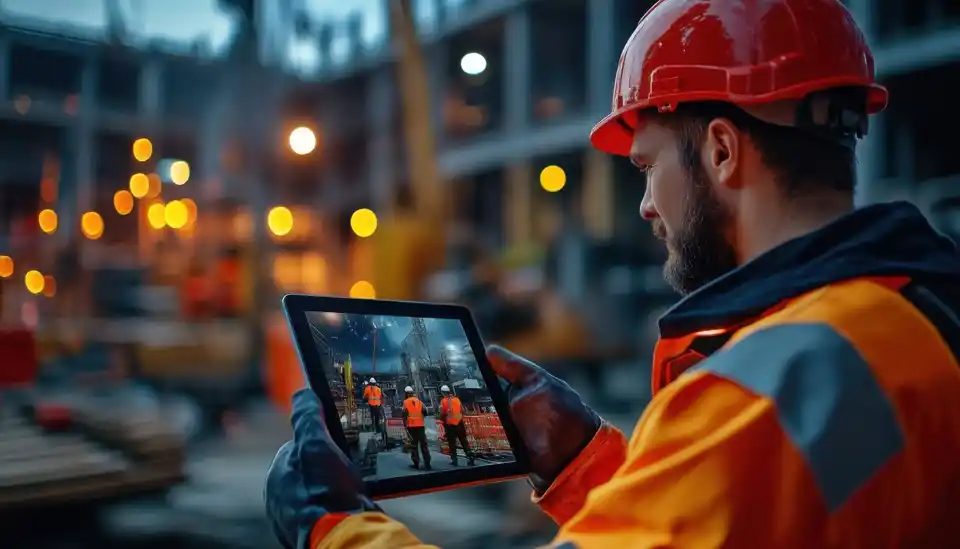
Real-Time Monitoring—What’s the big deal?
It’s pretty simple: real-time monitoring means you’re constantly collecting, sending, and analyzing data from machines and sensors with almost zero delay—sometimes in just a few milliseconds. Industrial sites rely on this kind of instant info for things like:
- Keeping machines healthy and predicting issues before they become disasters
- Triggering safety alerts and spotting hazards as they happen
- Checking quality and automating processes
- Tracking the environment and keeping emissions in check
- Knowing where assets are and how workflows are moving
For any of this to work, you need a network that’s fast, reliable, and built to handle a flood of data without choking.
Where legacy networks fall short
Sure, Wi-Fi, Ethernet, and 4G/LTE have powered factories and industrial sites for years. But when you push them in tough environments, the cracks start to show:
- Latency: If there’s too much lag, feedback and control messages get delayed, which is a nightmare for automation.
- Network congestion: Too many devices trying to talk at once? You get dropped packets, slowdowns, and general chaos.
- Coverage problems: Factories are full of metal, thick walls, interference—dead zones pop up everywhere.
- Scalability: Add a bunch of new sensors, cameras, or robots, and old networks struggle to keep up.
All this slows down your data, which means you lose the “real-time” edge.
How 5G changes the game
5G was made for exactly these headaches. Here’s how it flips the script:
- Ultra-Low Latency: Data zips back and forth in just a few milliseconds. That’s fast enough for real-time to actually mean “real-time.”
- Example: Automated vehicles can change speed and direction the moment they get a new command—no lag.
- Huge Bandwidth: Need to stream a dozen HD video feeds or crunch massive sensor data? 5G handles it without breaking a sweat.
- Example: Multiple cameras can stream in high-def all at once, smooth as butter.
- Massive Device Support: Hundreds or even thousands of sensors? No problem. 5G was built to handle dense networks.
- Reliability: Industrial 5G networks don’t go down easily. They’re built with redundancy and error correction, so you’re not left in the dark.
– Better Coverage: Thick walls and metal machines? 5G penetrates better than Wi-Fi, and with private networking, you can cover huge sites without losing signal.
Private vs. Public 5G—Why It matters
Public 5G from your local carrier is fast, but it’s not always tailored for the high-stakes world of industrial monitoring. That’s where private 5G networks come in—think dedicated lanes on the highway just for you:
- You get your own spectrum, no sharing with the public.
- You control the quality, performance, and security.
- Latency and speed are predictable, not a guessing game.
- Private 5G means your monitoring systems work the way they should, every time.
Real-World examples—5G Making a difference
Let’s get specific. Here’s where 5G has a real impact:
Predictive maintenance:
Sensors track vibration, temperature, and other stats on critical machines, sending data instantly. Analytics catch problems before they turn into breakdowns, keeping your operation running smoothly.
Autonomous vehicles & robotics:
AGVs and robots need split-second feedback and control. 5G’s quick response means they navigate safely, cut down idle time, and work seamlessly with the rest of your systems.
High-Definition video monitoring
Security cameras and operational feeds chew up a lot of bandwidth and need to be reliable. With 5G, you can stream multiple HD video feeds straight to the control center without lag. It’s live, smooth, and perfect for keeping an eye on things as they happen or digging into incidents later.
Environmental & safety sensors
Sensors that watch air quality, catch gas leaks, or detect fires need to deliver alerts fast—no delays. 5G makes sure those urgent safety messages get through instantly, so you can react before a small issue turns into a crisis.
Centralized dashboards & analytics
Live dashboards showing machine performance, KPIs, and workflow status need nonstop data. 5G keeps the streams flowing in real time, so you’re never left guessing about what’s happening on the floor.
How the IR2005G industrial 5G router enables real-time monitoring
To get all these 5G perks working in the real world, you need gear built for the job. That’s where the Horizon Powered IR2005G Industrial 5G Router steps in.
Reliable 5G connectivity
You get download speeds up to 4 Gbps, plus support for both 5G NR (SA/NSA) and LTE fallback. The IR2005G keeps all your monitoring devices connected and running fast.
Industrial-Grade design
This router doesn’t flinch at vibration, extreme heat or cold, or electrical noise—exactly what you find in real industrial sites. It keeps your systems online, even when the environment gets rough.
Robust antenna system
With up to six high-gain 5G antennas and smart 3D stereo stacking, the IR2005G covers huge factory floors, outdoor yards, and even remote corners. No more dead spots to interrupt your monitoring.
Security & failsafe architecture
Multi-carrier failover, VPN options like IPsec, OpenVPN, and DMVPN, plus firewall protection—your monitoring data stays safe, even if one connection dies.
Remote management with DMS
The Device Management Server (DMS) lets IT teams manage hundreds of routers, push updates, and fix problems—no need to send someone out to every site. That’s a game-changer for widespread industrial setups.
Versatile interfaces
You get multiple Ethernet ports, serial interfaces (RS232/RS485), and I/O options. That makes it easy to connect sensors, PLCs, SCADA, and all the usual industrial equipment to your network.
Step-by-Step: Deploying 5G for Real-Time industrial monitoring
Rolling out 5G in a factory, plant, mine, or logistics hub is smoother if you go step by step:
Define monitoring requirements
Figure out what data you need, how fast you need it, and how many devices you’re working with.
Perform site RF survey
Check where you’ll need coverage, hunt for interference, and map out the best antenna spots.
Select 5G deployment model
Pick between CBRS, private 5G, or a hybrid approach, depending on your security and performance needs.
Install gateway & edge devices
Set up tough 5G routers like the IR2005G where you need them most. Hook up your sensors, cameras, and controllers.
Integrate with backend systems
Connect your real-time monitoring streams with SCADA, WMS, MES, or cloud analytics.
Test & optimize
Check latency, speeds, and coverage. Fine-tune the network until it runs just right.
Scale & Manage
Use remote tools like DMS to watch over devices, push out updates, and grow your network as your operation expands.
The business value of real-time monitoring with 5G
Putting 5G monitoring in place isn’t just about tech—it pays off in real ways:
Reduced downtime
Predictive maintenance and live alerts catch problems early, stopping failures before they spread.
Better decision making
When you have live data, you see what’s really going on and can plan smarter.
Increased throughput
Automation gets sharper, productivity climbs, and output quality goes up.
Enhanced safety
Instant alerts help keep your people safe and make sure you’re following the rules.
Lower operational costs
Reliable systems mean less emergency work and fewer manual fixes.
Conclusion: The time for 5G in industrial monitoring is now
Real-time monitoring isn’t a “nice-to-have” anymore—it’s a must if you want to keep up. Old networks just can’t deliver the performance today’s factories and smart equipment demand.
5G, especially when you use tough hardware like the Horizon Powered IR2005G, fills that gap. You get low latency, rock-solid connections, and the kind of speed and reliability legacy networks can’t match—even in the toughest environments.
If you need visibility, speed, and instant response, industrial 5G isn’t just the next step. It’s the bedrock for the future of your monitoring and automation.
Check out Horizon Powered’s IR2005G Industrial 5G Router and see what real-time monitoring looks like for yourself.
FAQs (Featured snippet optimized)
Q1. What makes 5G better than Wi-Fi for real-time industrial monitoring?
5G provides lower latency, higher reliability, and greater device capacity, making it ideal for real-time control and analytics over Wi-Fi.
Q2. Can 5G handle video streams from multiple cameras simultaneously?
Yes. With multi-gigabit throughput, 5G supports high-definition, multi-camera streams without lag or buffering.
Q3. Do industrial sites need private or public 5G?
Many industrial operators prefer private 5G (often via CBRS) for security, performance guarantees, and control over the network.
Q4. How does IR2005G support real-time monitoring systems?
It provides ultra-fast 5G connectivity, rugged design, robust antenna coverage, security features, and remote management — enabling real-time data collection and response.
Q5. Is real-time monitoring with 5G cost-effective?
Yes — reduced downtime, improved automation, and better decision support often deliver strong ROI compared to legacy wireless systems.
Learn more About 5G Powers Industrial Real-Time Monitoring here.
Related Posts
Securing Factories with 5G AI Cameras
5G Security Cameras For Hospital and Healthcare Facility Safety
Comparing 5G vs WiFi Security Cameras
Securing High-Value Shipments with 5G Cameras
Boosting Port Security with AI Powered Cameras
Using Smart Cameras for Fleet Management and Driver Safety Monitorin
How to Deploy a 5G Security Camera Network: A Step-by-Step Guide
AI-Powered Customer Analytics – Improving Retail Operations with Smart Cameras
Reducing Cargo Theft with Real-Time 5G Surveillance in Logistics Centers
AI Surveillance for Shopping Mall Security: The power of CC1005G
Railway and Public Transport Security with 5G Video Monitoring
