
Connectivity as the new stethoscope
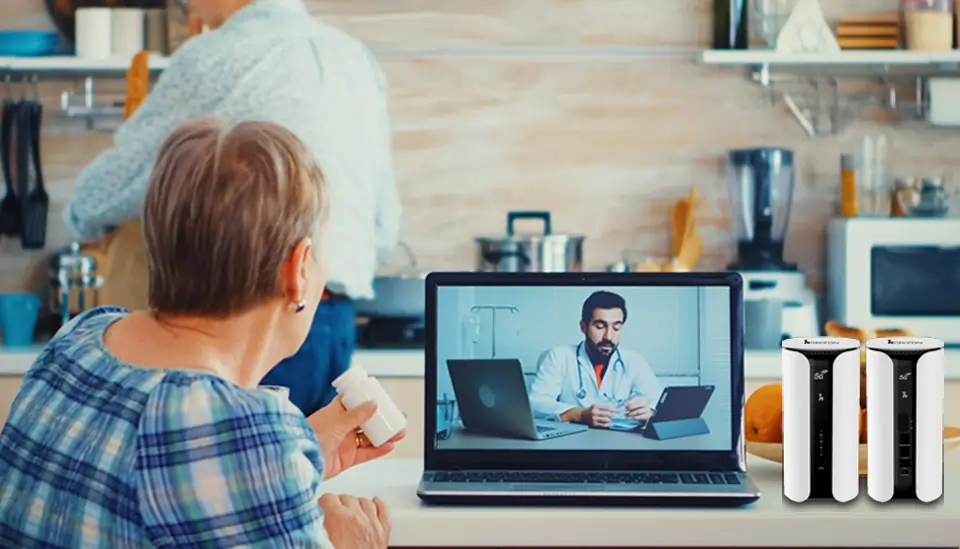
Not so many years ago, the concept of a doctor’s visit via laptop or phone was the stuff of novelty. Now, for millions, it’s the norm. Parents meet with paediatricians from the comfort of their homes. A country patient sees a specialist who operates hours away. Even routine visits, therapy sessions, and post-op checkups are being done online. Telemedicine isn’t the future of healthcare anymore — it’s now, and Supporting Telemedicine: Reliable Internet with Horizon HZ51 is making this transformation seamless.
But if you’ve ever been on the receiving end of one of these calls, you’ll understand how tenuous the system can be. The physician is in mid-sentence, the video stalls. A patient shows a scan, and the image pixelates. An electronic prescription grinds to a halt because the network refuses to play ball. These are not trivial bugs; in health care, they disrupt trust, delay treatment, and in some cases compromise outcomes.
That’s why connectivity is no longer a secondary detail. It’s as important to the patient experience as bedside manner or diagnostic skill. And it’s why Horizon developed the HZ51 Indoor 5G Router — an enterprise-class product built to ensure telemedicine sessions go as smoothly as a face-to-face visit.
Telemedicine’s growth and the connectivity gap
The move towards virtual care has been years in the making, but the pandemic accelerated it to a necessity. Overnight, clinics and hospitals were forced to adapt, providing online consultation to control patient volume and limit exposure. What initially was a temporary adaptation has now established its worth. Virtual health reduces travel time, increases availability in underserved areas, and maintains patients in touch with specialists who otherwise would be out of reach.
The figures do the talking. Statistics indicate a 60%+ increase in telemedicine uptake in the last few years, with utilization remaining constant even after clinics reopened. Patients appreciate the convenience. Providers appreciate the convenience. And in most instances, insurance models now facilitate it as an option.
But the one issue that continues to crop up: the internet connection. Consumer Wi-Fi routers, typical of small practices and even some clinics, simply weren’t made for high-density use. They strain under the pressure. Video calls are dropped. Files take forever to transfer. Security is sometimes little more than an afterthought.
In medicine, this is not acceptable. Clinics require networks that are secure, trustworthy, and scalable — able to handle sensitive information and mission-critical communication. That’s where the Horizon HZ51 comes in.
Horizon HZ51: An indoor router designed for healthcare
The HZ51 Indoor 5G Router is not simply another office internet box. It’s an enterprise-deployed 5G indoor CBRS router that has a specific application to healthcare organizations relying on telemedicine.
In contrast to home routers, the HZ51 employs SIM-based technology. That is, operators can manage their own private LTE or 5G network, or merge offerings of multiple carriers for optimal uptime. Its dual-SIM functionality provides clinics with backup at all times: in case one network stutters, the other takes over immediately.
Another advantage? Plug-and-play simplicity. Fewer smaller practices employ full-time IT professionals. The HZ51 is designed to be plug-and-play — clinics can easily set it up without extensive technical know-how. Physicians and staff can attend to patients rather than struggle with connectivity.
In short, whereas consumer routers are designed for surfing and streaming, the HZ51 is designed for mission-critical operations in professional settings.
Key features that fortify telemedicine
Redundancy with Dual-SIM CBRS capability
Downtime is unacceptable in healthcare. The HZ51’s dual SIM capability with Band 48 CBRS support enables uninterrupted failover. In the event of a failure on one connection, the router will automatically switch to the backup, maintaining the flow of consultations and record transfers.
High-Speed 5G + Wi-Fi 6 performance
A clinic isn’t a home with some laptops — it’s a space where multiple devices hook up simultaneously. Virtual visit tablets, imaging stations, employee laptops, and even networked medical gear all vie for bandwidth. The HZ51 employs Wi-Fi 6 technology, which provides low latency and consistent speed, even in high-density environments. That translates to HD consultations not stuttering, big imaging files being transferred in seconds, and monitoring gear remaining synchronized.
Security for patient data
Care providers operate under stringent compliance environments such as HIPAA, so each packet of information needs to be secure. The HZ51 has WPA3 encryption, support for VPN, and enterprise-grade firewalls. It also supports private LTE configurations, allowing hospitals to have the choice of operating secure closed networks for staff and patient systems.
Scalable for different facility sizes
From a solo doctor practice to a multi-building hospital, medical facilities come in many shapes and sizes. Enterprise class is the HZ51’s large-scale indoor deployment support. Clinics can begin small and scale up across branches, and big networks can deploy standardized configurations across entire systems.
Seamless integration with healthcare software
EHR systems, scheduling software, and telehealth video platforms — all of them rely on a stable connection. The HZ51 is designed to integrate seamlessly, so digital records are there in real time, and telemedicine platforms work with no lag.
Real-World use cases in healthcare
Urban clinics
Cities tend to struggle with congested networks and heavy traffic. With a CBRS-compatible desktop router such as the HZ51, clinics can offload from busy public networks and create stable private LTE connections. The payoff: fewer dropped calls and smoother video consultations, even at the busiest times.
Rural practices
Fibre is not always accessible in rural settings. The HZ51 serves as a 5G fixed wireless indoor CPE, allowing providers to introduce up-to-date telemedicine to the community where installing new cables is not an option. Physicians are able to communicate with specialists in real-time regardless of distance.
Mobile Health Units and Pop-Up clinics
Vaccination campaigns, field hospitals, and mobile diagnostic centres require rapid installation. The plug-and-play functionality of the HZ51 allows teams to set up secure networks within minutes. With SIM-based functionality, they never have to depend on local infrastructure.
Hospital networks
Hospitals manage tens of thousands of connected devices, from bedside monitors to staff communication equipment. The HZ51 scales to these environments, providing the reliability and security large institutions require while staying compliance-focused.
How providers and patients benefit
When the network simply works, care is seamless. Patients have smoother consultations with no stilted pauses or calls restarted. They become confident in the system and feel their providers are reachable.
For clinicians and staff, working on the internet is about fewer minutes spent struggling with technology and more minutes spent giving care. Diagnostic images move more quickly. Medical records update in real time. Colleagues can work together in real time without waiting for a slow system.
In the larger context, that reliability makes a difference. When a patient receives an on-time diagnosis because a scan is uploaded promptly, or when an expert consults without delay, technology has succeeded in facilitating improved care.
Frequently asked questions
Q1. What distinguishes HZ51 from typical Wi-Fi routers?
Unlike consumer routers, the HZ51 is a business-grade 5G CBRS router built with reliability, scalability, and security in mind for commercial settings.
Q2. Does the HZ51 enable private LTE networks?
Yes. It’s SIM-capable and supports both private LTE and 5G, perfect for enterprise healthcare implementations.
Q3. What is the purpose of the dual-SIM capability?
It offers redundancy. When one carrier fails, the second will automatically switch over to avoid downtime during consultations.
Q4. Is the router secure enough for healthcare applications?
Yes. With VPN support, firewalls, and WPA3 encryption, it meets HIPAA-level security requirements.
Q5. Will it support many users?
Yes. With Wi-Fi 6, the HZ51 is capable of supporting dense device environments common in clinics and hospitals.
Q6. Is the installation complex?
No. It’s plug-and-play enabled for easy deployment, even in clinics with partial or no IT teams.
Q7. Will it work in rural or non-fibre areas?
Yes. As a 5G fixed wireless CPE, it brings connectivity where wired infrastructure is not present.
Q8. Is it portable enough for use in mobile health units?
Yes. Its small size and SIM-based connectivity position it well for use in field clinics and pop-up locations.
Q9. Does it utilize only Band 48 (CBRS)?
It is designed to optimize with Band 48, but it also has support for multiple LTE and 5G bands for flexibility.
Q10. Can it interface with hospital systems?
Yes. It’s designed for enterprise-level integration, easily working with EHRs, telemedicine applications, and internal IT infrastructures.
Final thoughts
Telemedicine is no longer a nice-to-have add-on; it’s an integral part of how healthcare is accessed. But if it’s to work well, the network on which it’s based has to be fast, reliable, and secure. That’s where the Horizon HZ51 comes in.
With its dual-SIM reliability, Wi-Fi 6 performance, CBRS capability, and enterprise security, the HZ51 provides healthcare professionals with the assurance that their digital connection will last — in a downtown clinic, rural practice, hospital ward, or mobile unit.
For organizations seeking the top indoor CBRS router for enterprise rollout, the HZ51 is not just a device. It’s the foundation of trust in digital health.
Discover more about the Horizon HZ51 Indoor 5G Router and learn how it can help drive your telemedicine efforts.
Learn more about Supporting Telemedicine: Reliable Internet with Horizon HZ51 here.
Related Posts
Qualcomm X62 and 5G NR Capabilities: The Performance Driver of IR2005G
Increasing Remote Work Productivity with HZ51’s High-Speed Connectivity
Secure, Reliable, and Fast: What IR2005G Provides to Industrial Networks
Comparing HZ51 with Traditional Routers: A New Era of Internet Access
Dual SIM & Failover: Where IR2005G for Seamless Industrial Networking
Inside the Security Stack: VPN, IPSec, OpenVPN and Firewall IR2005G Features
From GPS to RS485: Flexing to the IR2005G’s Multiple I/O Interfaces
Transforming Home Entertainment with HZ51’s Ultra-Fast Speeds
Smart Homes Made Smarter: Integrating HZ51 for Optimal Performance
Ensuring Reliable Connectivity for Online Learning with HZ51
Bandwidth Control and VLANs: How IR2005G Maximizes Network Control